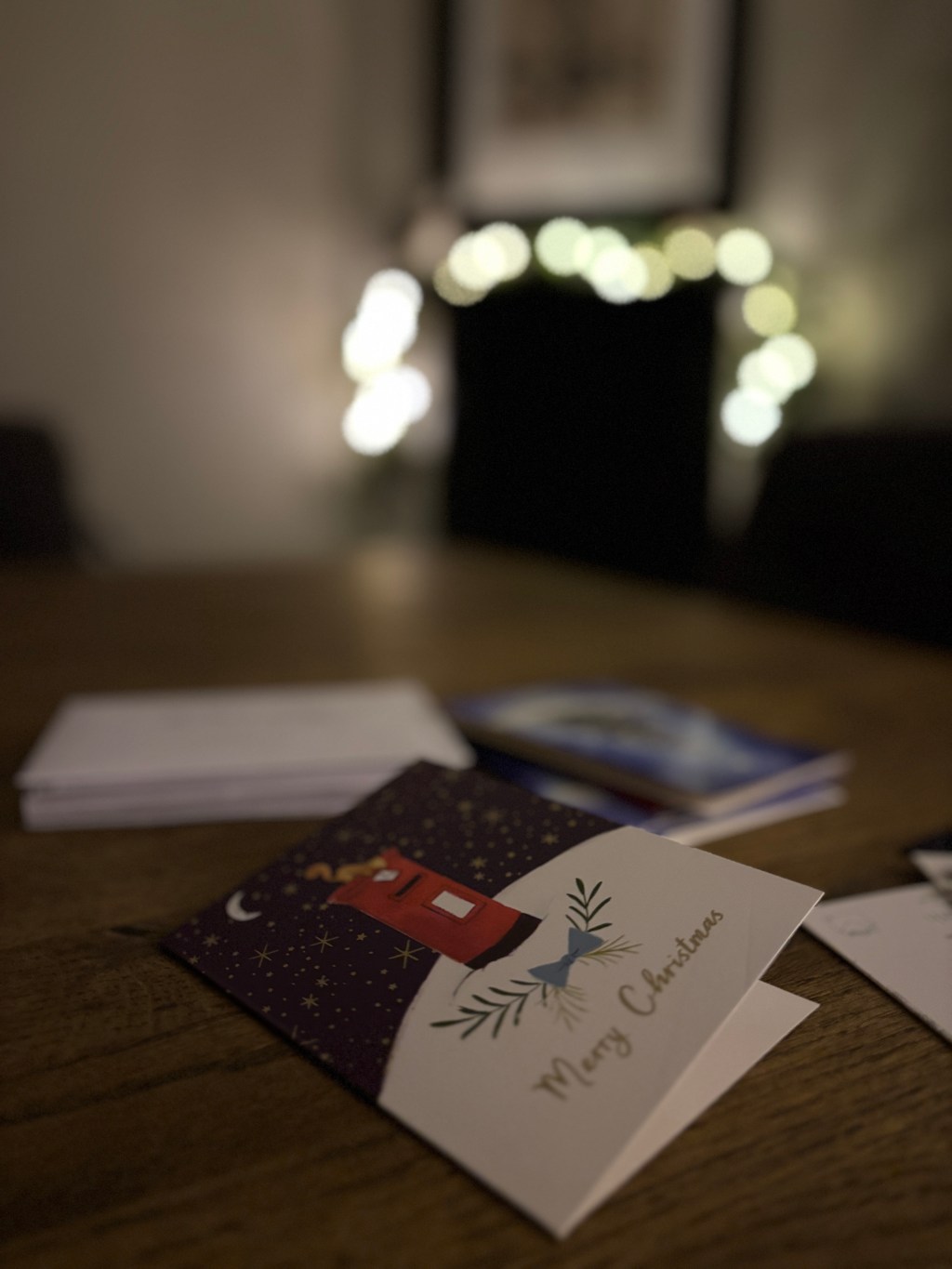
I can’t remember when I last wrote a stack of Christmas cards. I still have loads of the ones the kids made in primary school. I didn’t even send them back then. But I was chair of the PTA who organised the ‘another thing’ on the never ending list of things that a parent has to do with primary school aged kids at Christmas. So I felt obliged.
For years, I thought that they were too wasteful. And sending them to people you see everyday online via stories or can easily message, felt a bit outdated. But this week, as I wrote a rare Christmas card to a faraway friend, a spark of a memory lit up in my mind.
When I was a child, Christmas card writing was an event. My Mum and I would sit at the dining table with piles of cards, my best pen, and a list of names. I’d carefully write out everyone’s names – parents, siblings, even the dogs (making a point of that because I really wanted a dog and wasn’t allowed one). The best part was delivering them to neighbours in the dark so it would be a surprise on the doormat. Not so for the other kids in my street who dared to post a card to us. My Dad would watch out for them and be poised ready by the letterbox. He’d take the card from their hand saying thank you and scared the kids out their skin!
Where Has the Tradition Gone?
That sense of connection feels like a distant memory. Many of us don’t know our neighbours anymore, let alone send them Christmas cards. According to Royal Mail, the number of Christmas cards sent in the UK has been steadily declining for decades. In 2007, it was estimated that over a billion cards were sent during the season. By 2023, this number had dropped by 85%. The convenience of digital greetings, combined with concerns about waste, has made the tradition feel unnecessary.
I used to think so too. But thinking back, they weren’t wasteful when I was a child. Every card was part of a ritual. They weren’t just cards, they were part of Christmas. Each one proudly displayed with blue tack or on a piece of string with mini pegs. Then before new year, my mum and I would save the prettiest ones, cut them into gift tags with pinking shears, and store them for the next year. Back then, gifts didn’t need coordinating tags and wrapping paper to match a theme or look good on photos. Mum would use the backs of the cards for crafts or to write shopping lists.
Why Christmas Cards Still Matter
In a world where everything is instant, a handwritten card feels like a treasure. It says, I thought about you. It’s tangible proof of connection, something a WhatsApp message or Instagram story can never replace.
Cards don’t have to be elaborate or perfect. Nor do they need to go to everyone on your contact list. This year, I’m buying a small pack to send to people who’ve brought me joy, neighbours I’ve never properly spoken to, old friends I rarely see, and the people who’ve made a difference in my life this year.
As I was just writing this, my postman came and I got two Christmas cards which made me smile. How is that for serendipity?
Making Cards Sustainable
If waste is holding you back, there are plenty of ways to make cards more eco-friendly. Choose ones made from recycled materials or support local artists creating sustainable designs. Better yet, make your own if you’re crafty. And don’t forget to reuse old cards as tags. It’s a little effort now that saves time next year.
A Call for Connection
We used to send cards to neighbours we saw every day, and it never felt wasteful. I grew up in a home that was the original zero-waste household. Everything had a purpose. But for me true sustainability is about connection. To the earth, to nature, and, most importantly, to each other. If we can’t connect with the people around us, how can we hope to connect with the planet?
Christmas is about connection, and the Christmas card tradition, while fading, is a beautiful way to rekindle that connection that we all need and crave.
 By Eve Bell
Leave a comment